
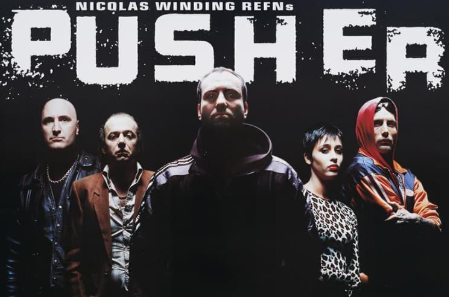
Nicolas Winding Refn’s Pusher stands tall amongst the crime thrillers that defined the nineties, competing in intensity and style with larger-budget classics like Pulp Fiction and Goodfellas. In Pusher, Nicolas Winding Refn portrays debt not as a simple financial burden, but as an inescapable nightmare, where every failed attempt to repay what is owed only drags its protagonist deeper into desperation and danger.
The first Pusher film follows the chaotic week of a low-level narcotics dealer named Frank as he navigates his way through the criminal underground of Copenhagen in a desperate attempt to repay his debts to Serbian drug lord Milo after a deal gone wrong. Throughout the course of seven days, we observe Frank’s descent into madness and violence as he desperately searches for the means necessary to repay his debts, no matter who he has to double-cross or harm.
On the technical level, Pusher is a very impressive film. The film’s budget was a little more than $965,000 and was shot on a Super 16mm camera, giving the movie its signature hand-held “boots on the ground” cinematic style. The cast and crew had to follow strict Danish union regulations, which prohibited weekend work and limited daily filming to a maximum of eight hours. While gritty and raw, Pusher also features moments of the neon-soaked synth aesthetic found in Nicolas Winding Refn’s later films, such as Drive and Bronson. Moments like the title-card-esque character introductions backed by music inspired by Denmark’s underground punk rock scene at the time cement Nicolas Winding Refn as a visual mastermind.
However, the first Pusher particularly excels at creating a sense of escalating tension and dread. Each day is presented with a new title card, and every day Frank gets a little closer to his inevitable fate. For the audience and Frank alike, each new day creates more tension and anxiety, to the point where the audience begins to fear each passing day just as much as Frank does. Every attempt to gather cash seems to bring more humility into Frank’s life. He asks his mother for cash, brutalizes his best friend, and preys on others; there’s nothing he won’t do to escape the wrath of Milo.
Milo isn’t presented as human. He’s presented as a force of nature, someone to be feared and respected. His influence and presence seem to extend throughout Copenhagen. However, Milo isn’t presented as a one-dimensional villain. From what little information is given about him, it can be gathered that he loves his daughter and loves to cook, even if his food isn’t very good. Although this isn’t there to make him sympathetic, it’s there to make his actions later in the film all the more shocking. By the time the audience feels safe with Milo, he’s kidnapped Frank and tortured him. Milo isn’t just an obstacle; he’s the anxiety and danger of the criminal underground that the film presents throughout.
Another standout character comes in the form of Frank’s girlfriend, Vic. Portrayed by the amazing Laura Drasbæk, Vic is presented as a drug-addicted “showgirl” who desperately wants to escape her lifestyle and profession. Vic is also a character who is constantly being taken advantage of by those around her. So in the end, when she’s presented with an opportunity to go far, far away from her surroundings, she takes it. She also takes Frank’s money, leaving him even more in debt. The audience isn’t meant to see Vic as a villain, but rather as someone similar to Frank; they’ve both been driven to desperation by their lifestyle choices.
In the end, Pusher is a character-driven tragedy defined by misery, misfortune, and lots of bad luck. If the film could be summed up in a phrase, it would be “Murphy’s law”: simply put, if anything can go wrong, it will. Technically impressive and at times beautiful, Pusher will surely satisfy the hunger of any crime-movie fanatic while also providing a brutal look at criminal life, violence, and the horror of debt.


