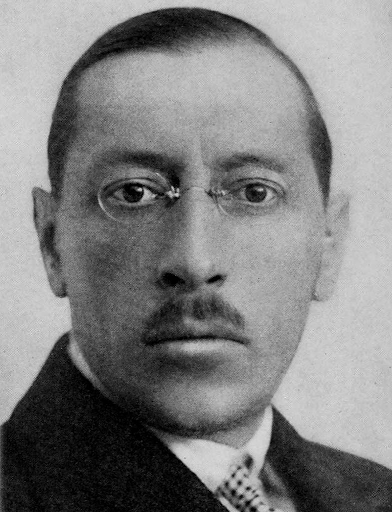
Igor Fyodorovich Stravinsky’s The Rite of Spring is a captivating, intriguing, and confusing mess–yet it still finds a way to work perfectly. The 1913 orchestral piece was not released as a standalone; Vaslav Nijinsky choreographed a full play to be premiered alongside at the Théâtre des Champs-Élysées in Paris, France. People hated it. The theater erupted in riot while the orchestra famously continued to play on.
Stravinsky likes odd instrumentation, evident in the use of quite a few unusual piccolo instruments: clarinet, trumpet, and timpani are some of them. He also liked to experiment with chromaticisms (a technique where a composer uses notes outside of the standard diatonic scale), which brings a certain unstable feel to the music. He did the same with his Firebird Suite, which was his big break back in 1910. As a side effect, when the Rite was premiered, he was already quite well-known. This fact may have further contributed to its success later on.
He clearly composed the Rite with the intention of it being jarring. There’s no argument there, seeing how the time signature changes hundreds of times throughout the 35-minute piece. Some of the less common ones traditionally used are 5/16, 11/4, and 3/8, just to name a few. If you ever want to look at the score, it really is a sight to behold. Try to follow along if you can read sheet music; it can be a fun challenge to test your brain.
There are clearly some standout sections with this work. The introduction to part 1 with the extremely unusual bassoon solo immediately comes to mind, for example. I suppose another one to listen out for would be the chugging strings in The Augurs of Spring—especially those unpredictable hits where you least expect.
This piece is a 5/5 stars for me. Some people may find it to be too much, but I enjoy the chaos—a perfect mix of classic orchestral scores and modernist pandemonium.